
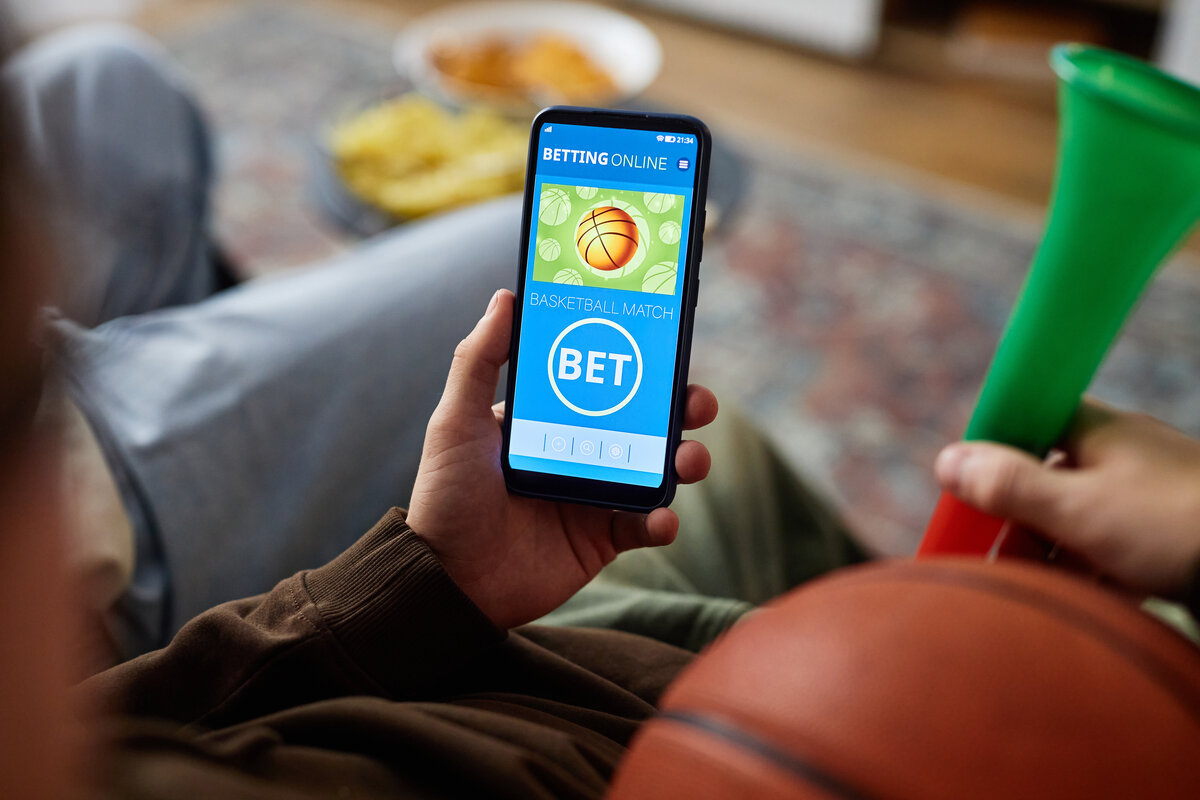
When you turn on the TV to watch a hockey game, throw on a YouTube video to watch a day in the life vlog, or even when you simply try to play a free mobile game on your phone, you’re more likely than not to see at least one online gambling advertisement.
[PHOTO: If passed a new bill would regulate and restrict sports betting advertising, promote research, and set standards for diagnosing and preventing gambling addictions.]
These ads feature bright colours, slots moving fast, and the promise of money to come your way, sometimes delivered by AI-created women and men. Hidden in the fine print will be listed resources for if you have a gambling problem.
Unlike other addictions, like drugs or alcohol, the signs of having a gambling addiction are much harder to spot.
ConnexOntario, Ontario’s mental health and addictions helpline, experienced a 144 per cent increase in calls following the privatization of online gambling in Ontario in April 2022, with significant increases in gambling-related calls from boys and men aged 15 to 24.
For Lindsay resident Chase, who would only speak to The Lindsay Advocate if granted anonymity due to the stigma attached to gambling addictions, it only took one visit to a real-world casino for him to develop an addiction.
His parents took him to one for his 19th birthday in 2025, thinking it would be fun. “Compared to having my first drink, I could go my whole life without drinking again. This was completely different. From the second I placed a bet, and won or lost, I just got an instant rush,” Chase said.
He won that night, something he said wasn’t good. “If you go to any gamblers anonymous meetings, the people that end up going downhill the fastest are the ones that have had a winning experience the first time, so they expect that every time.”
After that initial visit, he went one more time with some friends and stopped. Until that September he started school at Brock University, located close to Fallsview Casino in Niagara Falls.
Chase tagged along with a group of friends who were headed to the casino during frosh week, and the rush came back. “I won a substantial amount of money. It was a few thousand dollars. I was just in a complete state of euphoria,” noting that single trip turned into a monthly outing.
“It started going from I’m gambling with my friends, to I’m going by myself. Then it went from, I’m going by myself, to I’m going three times a week. Then it went from three times a week, to every day,” Chase said.
His wake-up call came when he won and lost $9,000 in one day. He phoned his parents asking for help, panicked he had ruined his future by neglecting his studies and gambling his money away. His parents pulled him out of school, and helped him get some intervention, including some counselling.
Chase believed this would be the end of his gambling days.
Gambling becomes a problem when “it starts to create negative consequences in your life,” said Véronique Le Goaix, addictions counsellor at FourCAST.
She points to what is called the life areas that can be impacted by gambling, financial; mental health; relationships; roles in life, including working, being a student, or a homemaker; responsibilities; or criminal activity.
This summer, “I discovered online gambling, which was even worse,” Chase said.
“I thought, I’ll start with some sports betting, it can’t be that big of a deal, it never bothered me before.” That quickly turned into playing blackjack, poker, slots and other online games.
La Goaix said, “It’s more about the games that are fast paced, create more of a dopamine hit – that excitement. That’s what ends up getting us hooked,”.
She said online gambling is like having a casino right in your pocket, making it easier to take part in. “Online gambling is so accessible, it’s in our pockets 24 hours a day. I could be (gambling) at any time, as soon as I have a trigger, versus I have a thought to gamble, but maybe I have to wait until after work to get to the casino.”
In 2021, the federal government made it legal to gamble on individual sporting events, as well as individual outcomes within a game, such as what a specific player might score.
According to Ontario’s Ministry of Tourism, Culture, and Gaming, the provincial government spent more than $70 million last year on gambling-related treatment programs, awareness campaigns and research. The online industry spent an additional $23 million on responsible gambling campaigns, and paid $807 million in provincial taxes to Ontario in 2025.
Now, the federal government has proposed a new act to create a national framework on sports betting advertising, under Bill S-211. If passed, this bill would regulate and restrict sports betting advertising, promote research, and set standards for diagnosing and preventing gambling addictions.
The bill passed its second reading in the House of Commons by a 291-28 vote on April 22 and was referred to the Standing Committee on Canadian Heritage. It will soon make its way back to the House for a third reading.
The Liberal party, which introduced the bill, is concerned by the overwhelming abundance of sports betting advertisements that often overshadow the sport itself, especially in Ontario, where private companies operate.
Over four months, Chase wagered almost $120,000. “You can wager $100 in seconds,” he said.
He was able to once again get help from his parents and hasn’t gambled since late August. Now, he hopes others don’t end up in the same position he did. “I didn’t have a lot of money to gamble with, yet I was still gambling every cent I had,” Chase said.
A 2026 Mental Health Research Canada study found that 64 per cent of Canadians over 15 participated in any form of gambling last year, accounting for roughly 19 million people.
An IPSOS survey of Ontario residents found that 44 per cent gambled online, with men gambling more than women.
At FourCAST, “we’re here to work with people around the goals they set for themselves,” Le Goaix said. Patients aren’t expected to simply stop cold turkey, but instead maybe they start setting a weekly spending amount. The biggest issue is with so many websites and apps it’s not hard for someone to reach that limit and then move onto another platform
Chase was using multiple apps like Bet MGM, OLG, FanDuel, Bet 365. “I actually got banned from FanDuel for betting erratically. They thought I was a robot.”
He would set weekly limits for himself on these apps but when he reached one, he would turn to another app. “I would also set my limits so ridiculously high that I never would stop. Through those apps, even if you have a limit, you can just override it.”
His mental health took a toll. “There were days where I was questioning, am I ever going to get out of this. Is there even a point in living at this point? I’ve lost all my money, I know that if I get more money, I’ll probably just throw it all away. It was very depressing.”
On top of that Chase would get physical symptoms. He would get agitated, irritated and sweaty when he wasn’t gambling.
He’s not alone. A 2026 survey by the Canadian Men’s Health Foundation found that 35 per cent of men aged 19-29 fell into the high-risk category when it comes to online gambling.
Mental Health Research Canada also found that those with gambling problems are four times more likely to report moderate to severe anxiety symptoms, three times more likely to report moderate to severe depression symptoms, four times more likely to report suicidal thoughts and seven times more likely to report suicide planning.
Chase said the ease of online gambling is worrying. “With the casino they will eventually kick you out, and if you’re acting like an idiot, they’ll kick you out. Online apps are much more instantaneous, so you’re not going to have to wait for that rush.”
He says the proposed bill would be beneficial, “especially in the earliest stages of recovery…(ads) just remind you that (gambling is) considered normal, and your brain will start to say, ‘it’s normal, maybe I can go back for a little bit.”
Le Goaix is also hopeful the bill will be passed. “There are people who can engage (in gambling) and it’s not a problem, but let’s put some protection in place for those who do find themselves having problems.”
An analysis by CBC found that two to three ads are played per minute during sports games. CBC partnered with the University of Bristol to assess the 2026 NHL playoffs to count the numbers of logos and gambling messages.
Across seven televised games featuring Canadian teams, viewers faced 3,000 gambling messages. Ninety-five per cent of those instances included no information about harm reduction or age restrictions.
Le Goaix said online ads make it harder for those with an addiction. “If we’re confronted with reminders and triggers, it’s really difficult. If I’m trying to stop smoking, but the person I live with is constantly smoking in front of me, it makes that much more difficult to quit.”
With the abundance of ads, it makes hard for those trying to beat an addiction to do something as simple as watch a YouTube video or even play a free mobile game on their phone. “Every time we see these things that we’re trying to get away from, it’s a trigger. It plants the thought. Some people say, ‘I wasn’t thinking about it until that commercial came up,’” Le Goaix said.
While Chase says many who gamble are called selfish, “your brain is so dopamine deprived and you’re chasing such a rush that you feel you have to do this. I can’t express this feeling to anyone unless they’ve experienced it, they’re not going to fully understand.”
Le Goaix hopes that more conversations around gambling happens. “We need to get the education out to have people recognize that just because we’re not ingesting something like a substance, doesn’t mean it’s (not harmful).”
Chase said he’s thankful to have had parents who helped pull him out of his addiction twice. Now, he searches for dopamine in other ways, including skydiving and riding rollercoasters. Chase has plans to go back to school next fall and become a paramedic, happy to have taken control back over his life.
For free, confidential gambling support, contact ConnexOntario at 1-866-531-2600, or text 247247 for 24/7 referrals to counselling, peer support, and local Ontario treatment programs for you or a loved one.


Leave a Comment
Your email address will not be published. Comments are moderated.