
Tsawwassen, B.C. sits on a sun-soaked low peninsula and enjoys one of the driest, sunniest microclimates in the Lower Mainland. About the size of Lindsay, but spread out with no clear, central core, it’s just north of Point Roberts – the tiny U.S. exclave accessible only through Canada.
For an Ontarian, it feels like a small, temperate outlier – a happy haven of walkers and runners, scattered families, boomers and coastal couples.
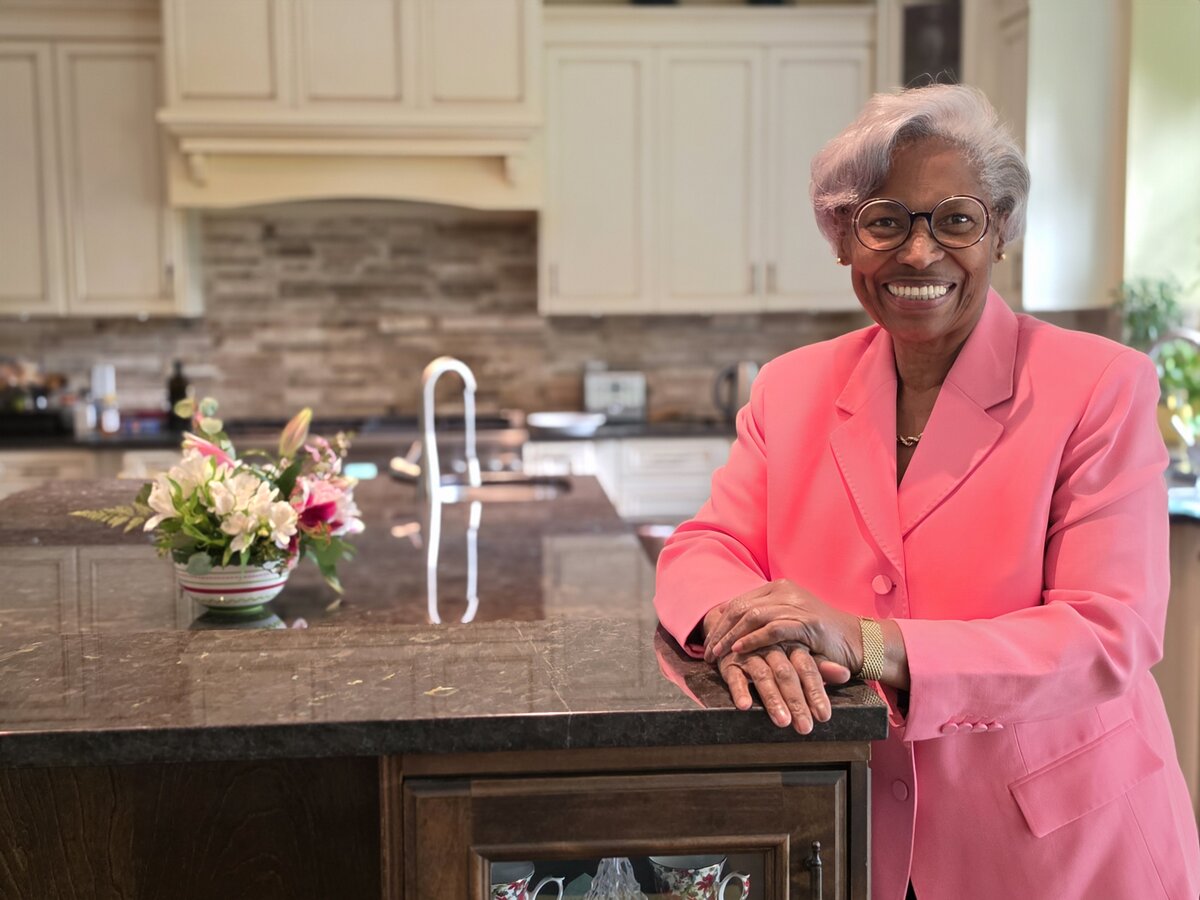
It’s here where I’ve caught up with Dr. Avis Glaze, one of Canada’s most influential educational leaders, her base for the past 14 years. I visited her home on the west coast to interview her over brunch about some of the most urgent issues in education today.
(Full disclosure: I formerly worked for Glaze as her senior writer at the Ministry of Education in the Literacy and Numeracy Secretariat. Glaze was CEO of the secretariat and chief student achievement officer of Ontario at the time.)
The plates of bacon, over easy eggs, and fresh fruit are prepared by Glaze in her spacious kitchen assisted by her husband, Peter Bailey. As dishes are cleared, we settle into conversation while her living room is ablaze in morning sunbeams.
Now in the winter of her career, Glaze nonetheless eschews reflection for action, as she continues to work on a book that pushes her legacy forward.
One of the key tenets of her work in education is her view on the role of a teacher.
She believes teachers “must have the courage to teach the child in front of them, not just the curriculum in front of them.”
“Many young teachers feel they have to stick to the curriculum so rigidly that they forget they can adapt it,” she says. “Adaptation is not lowering standards. It’s helping every student reach their best. There is no ‘average’ child — and there never has been.”
She tells stories from her years as a superintendent — visiting classrooms where students were disengaged, then walking into others where the same demographic groups were thriving. The difference was never the children. It was the courage of the teacher, she says.
One example stays with her: an Indigenous education program where even mathematics was taught outside, given life outdoors was of high relevance for so many of the Indigenous students in this example.
“Those students were highly motivated,” she recalls. “The teacher focused on what they needed and adapted the curriculum to get the best out of them. That’s courage.”
She says student motivation is not a mystery — “it is a response to relevance.”
Glaze grew up in Jamaica, knowing she wanted to be a teacher from an early age. She arrived in Canada with her first degree already under her belt, then earned two master’s degrees and a doctorate at the University of Toronto, forming the academic foundation for her influential career.
Among many other roles, Glaze served on Ontario’s Royal Commission on Learning, was the director of education for Kawartha Pine Ridge District School Board in nearby Peterborough, and later as the founding CEO of the Ontario Literacy and Numeracy Secretariat. She helped drive major gains in student achievement and equity.
One of the strongest themes in the conversation — and one deeply relevant to communities like Kawartha Lakes, she points out — is the role of the trades.
Glaze admits she once held the same bias many educators do: pushing students toward university without fully understanding the intelligence and skill required in trades.
That changed when, as a school career counsellor, she brought principals to Humber College.
“I saw things being done there that I had no idea existed,” she says. “I went home feeling demoralized at my behaviour as a guidance counsellor. People don’t work with their hands alone — they also work with their heads.”
She recalls watching carpenters measure, calculate, and solve problems with mathematical fluency.
“They knew more about fractions than I did,” she says, laughing.
Canada needs tradespeople desperately, she notes, “and many young people need the sense of purpose the trades provide.”
Glaze – who recalls speaking at I.E. Weldon Secondary School in Lindsay – says this is especially true for young men who feel left out of today’s economy.
“If people feel others are getting all the benefits and the spoils, resentment sets in,” she says. “We must identify what this large group needs and address it.”
AI, Ethics, and the New Literacies
Glaze is not alarmist about the rise of artificial intelligence — but she is unequivocal.
“We cannot hold back technology,” she says. “But we can teach young people to manage it ethically.”
She believes ethics must always be central to a school system’s curriculum, not peripherally, but as a foundation.
“Character development matters. Students need a moral compass in a world where AI can do their writing for them.
Glaze is widely known for her work in character education because she helped design, launch, and champion Ontario’s province‑wide character development initiative.
Across Ontario, Glaze promoted a model of schooling that emphasized attributes like respect, responsibility, empathy, and integrity as core learning outcomes, insisting they be integrated into daily classroom practice, not treated as an add‑on. She also created leadership development for educators, so character education became system‑wide, not isolated to individual classrooms.
Then – and now – she connects character development to student achievement, arguing that strong values, emotional intelligence, and ethical decision‑making support academic success.
“Cheating is not new. In the old days sometimes children might have had their essays written for them. But AI makes it easier than ever.”
The solution, she argues, is not surveillance but demonstration.
“The big question is: how do students demonstrate comprehension? Anyone can have something written for them. But can they explain it? Can they use their knowledge?”
She also stresses other literacies: financial literacy, media literacy, and critical thinking.
“Fake news is everywhere. How will children know what’s true if we don’t teach them? These literacies are essential for the world they’re entering.”
Community, Business, and the Future of Canada
Glaze has always been an optimist, and that viewpoint is grounded in collaboration. She believes business, labour, and industry must be partners in education — “we can’t afford, as a nation, to have anyone on the sidelines.”
“Business leaders want honesty, responsibility, and an educated workforce,” she says. “They care about character development as much as educators do.”
She also believes Canada must confront economic precarity directly — through policy, innovation, and courage. Basic income, she says, deserves serious consideration as a policy.
“People are willing to work, but sometimes they cannot find work. We cannot just keep saying we don’t have enough money to keep people out of poverty. We must prioritize what matters, so that people don’t slip through the cracks and become resentful,” returning to her earlier theme.
Seeing Students Clearly
Glaze has long been one of Canada’s strongest voices on equity, identity, and inclusion. She does not shy away from the realities of race, culture, and belonging.
“Identity politics is here to stay,” she says. “I am a Black woman from the Caribbean who became Canadian — my identity comes with me. Teachers must see their students, see their identities, and see what they have to offer.”
She is equally direct about Indigenous education.
“The Indigenous population is the fastest‑growing population in Canada. If the fastest‑growing group is not achieving, what will our future look like? Even at the level of enlightened self‑interest, we must care.”
Glaze’s expertise has been sought around the world. She knows schools across the globe firsthand, having worked with educators in Australia, England, Finland, Singapore, Ireland, Scotland, Germany, the Caribbean and many parts of the United States and multiple Canadian provinces. She has helped countries and whole systems strengthen leadership development, improve literacy outcomes, and build more equitable school systems.
When asked what worries her most about the future of education, she doesn’t hesitate.
“Teachers enter this profession because they want to improve the lives of children,” she says. “It’s not for the pay or the holidays — it’s because they believe in enhancing students’ life chances and strengthening the society we all share.”




Leave a Comment
Your email address will not be published. Comments are moderated.