
There are only so many ways into Lindsay, and even fewer ways across the Scugog River.
That geography gives Kawartha Lakes Police Service an opportunity worth testing.
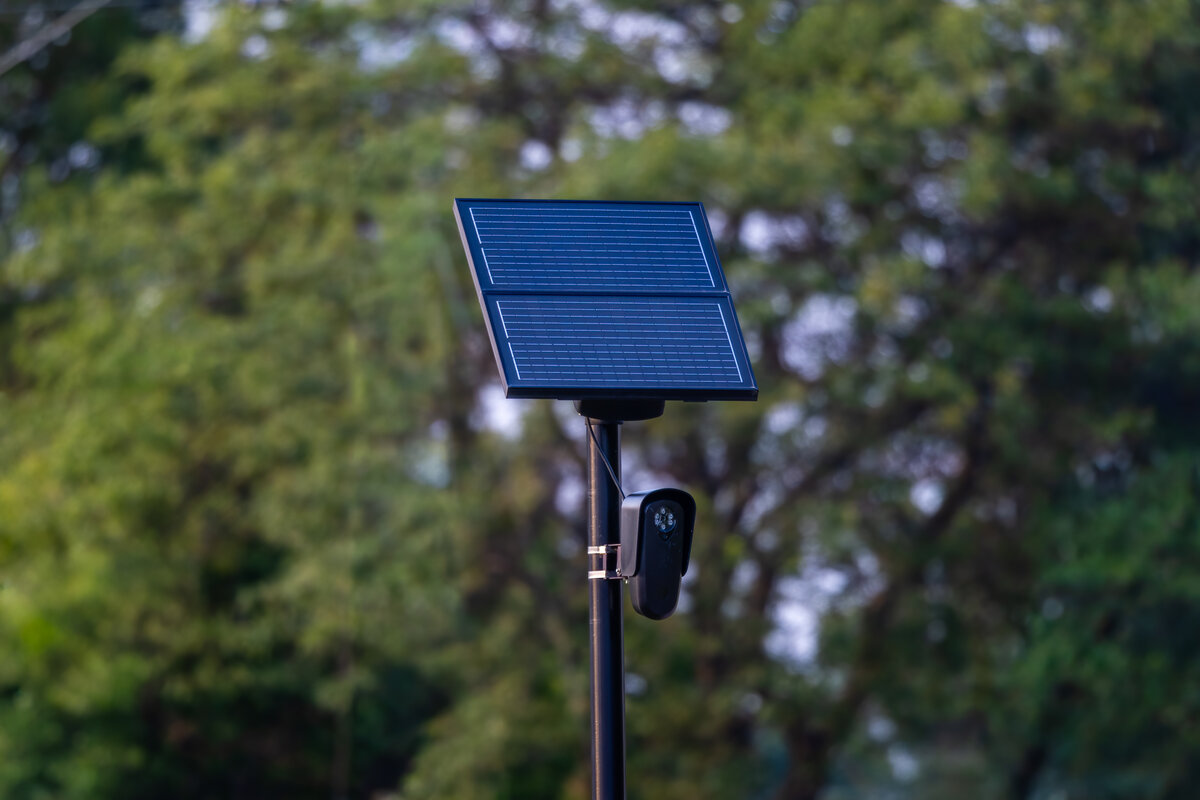
KLPS should run a one-year pilot using automated licence plate recognition, or ALPR, cameras at one or two strategic gateways to Lindsay.
Not cameras on every entrance. Not facial recognition. Not a permanent surveillance network.
A limited trial designed to answer a simple question: Can fixed ALPR help police identify vehicles already connected to serious crime while making better use of limited officer time?
Waterloo Regional Police Service is already expanding its use of the technology. In September, Waterloo police and the Ontario Ministry of Transportation announced an agreement allowing ALPR-equipped cameras on provincial highways.
Waterloo also reports significant results from mobile ALPR units in police cruisers. Between Jan. 1 and Sept. 11, police said those systems generated 7,749 alerts and contributed to 75 vehicle recoveries, 94 arrests and 77 charges.
Those figures do not prove fixed cameras would produce the same results in Lindsay.
That is why Lindsay should test them.
The strongest argument is police productivity.
Kawartha Lakes police could already park an ALPR-equipped cruiser on Lindsay Street South or Highway 7 and scan passing vehicles. But keeping an officer there around the clock would consume several shifts every day.
A fixed reader can perform that repetitive task continuously. If it detects a vehicle police are legitimately looking for, an officer receives an alert, confirms the information and decides what action is justified.
The machine watches the road. The officer does the policing.
Lindsay is also well suited to a trial.
Major approaches include Lindsay Street, Angeline Street, Kent Street, Kawartha Lakes Road 36 and Highway 35. The Scugog River creates natural chokepoints at bridges including Highway 7, Lindsay Street South, Lindsay Street North and Wellington Street.
Police should examine past drug use, stolen vehicles, firearms and other serious crime investigations and select the one or two locations where fixed ALPR would be most likely to prove useful.
Lindsay has long been known as the Gateway to the Kawarthas. Traffic passing through the city continues toward communities and cottage areas farther north and east.
A strategically placed reader could therefore do more than protect Lindsay. A vehicle identified while moving through the gateway may also be headed deeper into Kawartha Lakes.
Recent Lindsay drug cases show why the question matters.
In March, Kawartha Lakes police reported seizing large quantities of fentanyl and cocaine, a loaded handgun and cash during a Lindsay investigation. In June, another investigation resulted in the seizure of about 226 grams of fentanyl.
Those cases do not tell us what routes were used or whether ALPR would have changed the outcome.
But drugs, stolen vehicles, firearms and wanted offenders move between communities, often by road.
Lindsay does not need to become crime-proof.
It only needs to become a little harder and a little riskier for travelling offenders.
If travelling through Lindsay in a vehicle already known to police carries a greater likelihood of detection, that changes the risk calculation.
Privacy should be built into the pilot from the beginning.
Gateway locations generally have limited pedestrian traffic, allowing cameras to be aimed at vehicles and licence plates rather than sidewalks, storefronts or faces.
The rule for ordinary motorists should be simple: no hit, no history.
If a plate does not match an authorized police list, the record should be deleted as quickly as technically possible. The purpose should be to identify vehicles police have a legitimate reason to find, not to build a database of everyone’s movements.
The pilot should also expire automatically after 12 months unless the results justify continuing it.
Before the cameras are switched on, KLPS should define what success means.
How many legitimate alerts were generated? Were stolen vehicles recovered or wanted people located? Did the cameras assist drug, firearms or other serious-crime investigations? How much officer time was saved? Were there false alerts or privacy complaints? Did vehicles of interest simply shift to other routes?
Then publish the results.
If the cameras scan thousands of vehicles and accomplish little, remove them.
If one or two fixed readers repeatedly help police locate wanted vehicles, support serious investigations and save officer time while quickly discarding non-hit data, there would be a strong case for continuing or carefully expanding the program.
Lindsay should not build an electronic wall around itself.
But as the Gateway to the Kawarthas, Lindsay should test one or two electronic tripwires to see whether they can deter serious crime, improve detection and raise the cost for offenders operating here.


Leave a Comment
Your email address will not be published. Comments are moderated.