
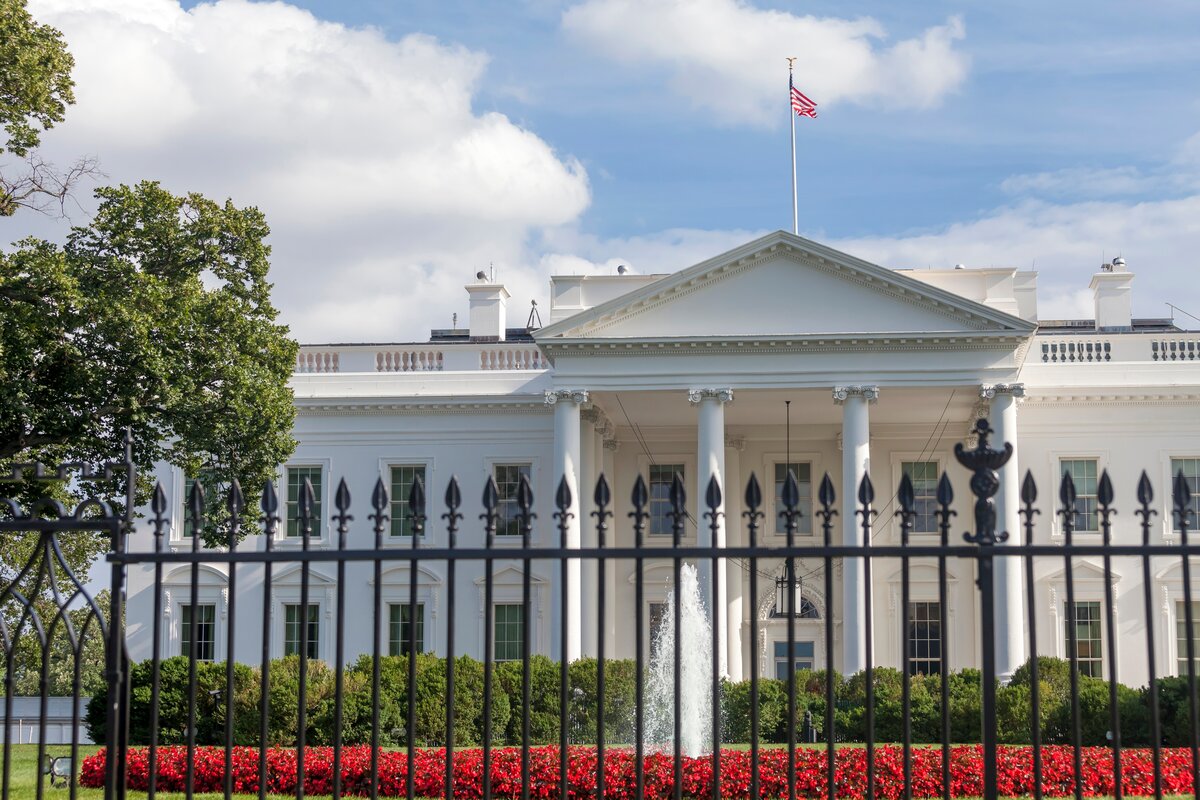
Like many Canadians, I paid close attention to the American midterm elections. I stayed up late to watch the results on Nov. 3 night until the wee hours of Wednesday morning. Like almost all Canadians, I was jubilant about the results. I could now hope that the insane trade war and the more insane tariffs on our goods are finished and that the American president would stop insulting us. For now, or at least in the immediate future, our sovereignty is out of range for the new ‘manifest destiny’ originating in the White House.
In what can be labelled a political tsunami that ran right through most corners of the United States, the MAGA forces lost control of both houses of Congress to the Democrats. I joined a wide group of people sighing in relief.
However, I must ask myself and all readers, is the course of history really that simple? Does the weakening of one political actor and his political movement signal the transition to a new order, to a safer ground? Can we expect to see the easing and the weakening of those political and economic forces and conditions that brought Donald Trump into the White House, not once but twice?
What are those forces and conditions?
Let’s begin with inequality. It is widely noted that we are reaching extreme levels of inequality in Canada and around the world. According to the ‘2024 Annual Homelessness Assessment Report to Congress,’ the number of homeless people in the United States has risen to 771,000. They report that homelessness has increased by 19 per cent between 2007 and 2014. And between 2023 and 2024 it has increased by an additional 18 per cent. This corresponds with Canadian conditions. The Financial Accountability Office of Ontario ‘estimates that from 2022-23 to 2025-26, the known population experiencing homelessness in a given year increased from 62,000 individuals to an estimated 77,000 individuals, an increase of more than 23 per cent).’
These figures do not include the realities of the so-called working class or middle class who are having trouble putting food on the table and gas in their tanks from rising prices and stagnating wages.
We find more fortune on the other end of the wealth spectrum. Forbes magazine recently announced that Canada has 82 billionaires. According to a recent broadcast by the CBC show ‘Ideas,’ globally there are now 19 centibillionaires, over 3,000 billionaires and one near-trillionaire (guess who?). Economists, sociologists and historians point out that we are returning to a ‘gilded age’ of disproportionate wealth – where the richest one per cent of the world possesses more than 50 per cent of the bottom half.
Furthermore, this inequality is so transparent. We see the homeless population when we walk downtown. We experience our downward drift when we go food shopping and the loss of this year’s holiday. And the rich are shamelessly conspicuous about their wealth. The economic gulf is a poorly kept secret.
Much of this wealth is being realized in the big-carbon (oil and gas) industries. We learned late in the American election that big oil companies realized about $130 billion in profits since the start of the war in Iran while the rest of us grew dizzy watching the gas meters spin as we filled up. These are the same companies who spend billions of dollars downplaying the effects of climate-change, to optimize and extend their profits while literally imperiling our futures. Another industry winner is the digital-platform, artificial intelligent and robotics sector. In an increasingly unregulated environment, they are making business and application decisions that infringe on our privacy, create and threaten unemployment and make threats on our personal, professional and physical lives that might be unimaginable. About 30 individuals, the so-called ‘tech-bros’ are making decisions that just might affect everything, and I do mean everything.
So, not only are they making lots (and lots) of money, they are making it at the expense of our welfare, our environment, our privacy, our jobs and our futures. It is no wonder that the wealthy and their companies back political parties that advocate for weaker and less-regulatory governments. It is estimated that Elon Musk donated about $450 million (USD) to Republican candidates in the 2026 midterm elections.
Policy decision clout resides squarely with the wealthy. Most of the rest of us are observers. Many at the lower ends of the income/wealth scale are becoming resentful and they are listening to voices that articulate their resentments and turn their anger on ‘elites.’ Unfortunately, at least until now, they frequently mis-identify the elites that contribute to this downward drift.
Predictably, we have witnessed a rise of political populism. A large swath of the population in Canada, the United States and Europe has become disenchanted with the economic and political orders. They believe that the current political and economic regimes lower their living standard and their sense of belonging. As the welfare and regulatory state and the labour movement receded since the 1970’s, many workers were losing their good jobs to globalization and digital technologies. Right-wing populist forces understood and acknowledged that political disenchantment; that fear and hatred of elites. Unfortunately, they pointed to the wrong groups of people – to scientists, academics, so-called globalists, liberals and progressives. Right-wing parties and movements took advantage of this growing sense of alienation and founded the MAGA movement in the United States, Brexit in the United Kingdom, and other parties throughout Europe. Canada was not exempt. There is a MAGA tone to the so-called Freedom Convoy and the separatist movement in Alberta.
There is a sad irony in this political opportunism. As Donald Trump was acknowledging their fears and anger, (I am your voice, I am your revenge), he was building a political movement that made matters worse for working and lower income Americans. He was diminishing accessible health care, weakening unions and shrinking the size of the welfare state. At the same time, he was granting tax breaks and deregulation to his economic partners and friends. Inequality got much worse during his government. To quote, ‘the rich get richer and the rest of us get poorer.’ And Trump got much richer. It is estimated that he made about $2.2 billion during his first year in office during his second mandate.
On Tuesday, the political bubble burst. Many Americans saw through the hypocrisy and voted against Donald Trump and his MAGA movement. But now Americans face the real political challenge. Weakening the MAGA influence is only the beginning. How do they address and correct the political and economic unbalance that created the resentment, and the populism and the mis-directed anti-elitism? Are the Democrats up to that task? This super-rich crowd will not go down without a fight. They like their money. And they like their power.
Let us turn our anger and resentment at the real elites. The ones with too much money and too much power. That includes a real transfer of wealth and income from the super rich, like the very-high income special tax in Massachusetts. We need governments that have real and accountable regulatory authority. To turn their power and authority on the AI that threatens our jobs and privacy and climate change that threatens our environment. We need a universal basic income program that brings dignity and security to all of us.
Nobody needs $1 billion. But we do need our jobs, our dignity, our environment and our future. Is that asking for too much? Gifting all individuals with economic well-being, a sense of dignity and a sense of future should stop most talk about insane conspiracy theories and populist movements that bring us lies and grief.
Leave a Comment
Your email address will not be published. Comments are moderated.