
While El Nino is dialing up global heat, that’s not the kind of green we want at Christmas.
Snow makes for a beautiful holiday season. So does time spent with loved ones, sharing great times, great food, and gifts.
But all of that sharing can mean mounds of trash going to the curb. Canadians produce about 50 kg of waste per person in December, roughly 25 per cent more than in other months. Just maybe, we can do better.
I remember the Christmases when my daughter was young. We literally had a garbage bag started as the gifts were torn open. All that gift wrap going to waste.
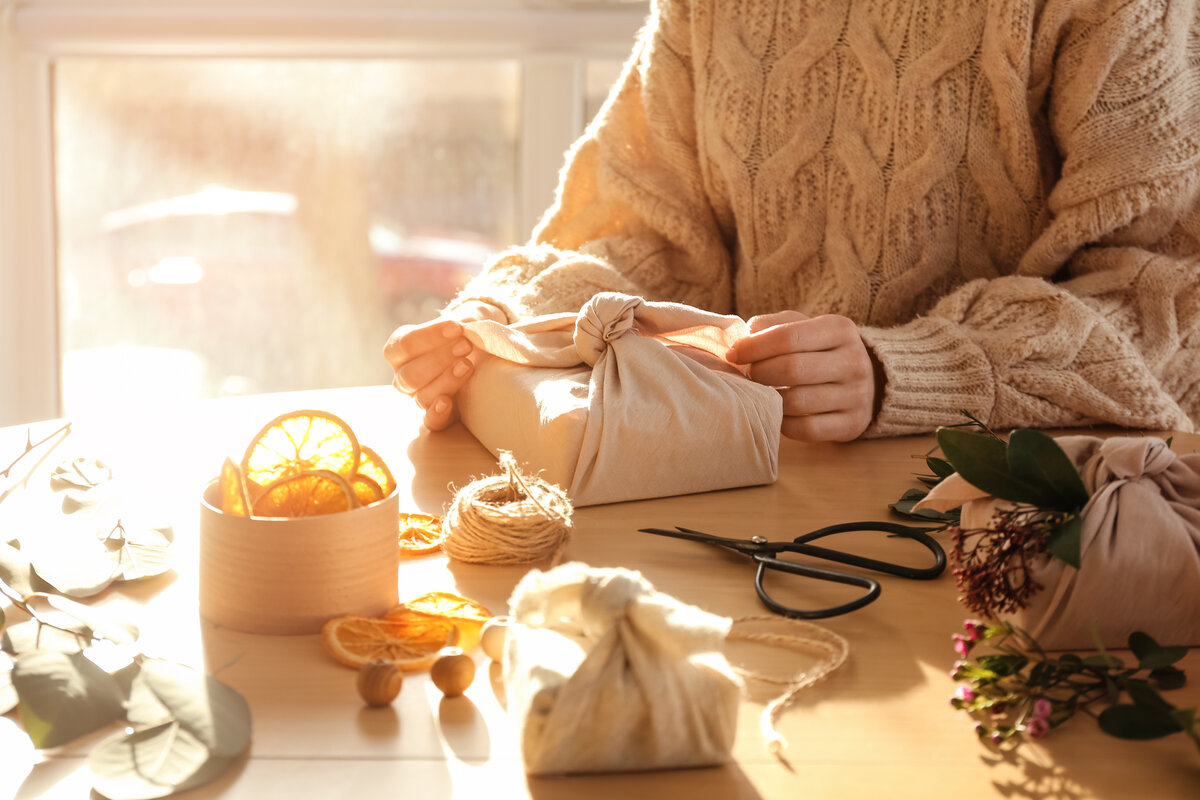
Then I found fabric gift bags. I’ve been reusing them for years. They cut wrapping time in half and save money. I also made a few fabric bags with Christmas-themed fabric. Not every gift fits in a bag, but there’s a craft for that. The Japanese tradition of furoshiki, wrapping items in squares of fabric, is gaining traction. The fabric is tied so you don’t need ribbon. There are lots of examples online.
Wrapping with fabric is a gift to the planet. So much store-bought paper and glitzy ribbon can’t be recycled (no metallic papers, sparkles, or foil can be). And ribbons are usually made of synthetics like polyester – essentially a plastic that won’t break down into much that nature recognizes.
For my environmentally aware friends, I’ll sometimes use brown paper tied with twine, with dried flowers tucked in.
These days I prefer no-wrap gifts, like experiences – a gift card to a favourite restaurant, or a ticket to a local theatre production. The only “wrapping” required is a card – preferably with no sparkles, metallic inks or batteries. Donations to a loved-one’s favourite charity, in their honour, is a way to spread the love even further.
We could also look at buying higher quality items that last, and can be passed on. Cheap baubles and toys from China too quickly become garbage. When shopping, ask yourself, where will this item be in 100, 200, 400 years? If it’s made of plastic, it’ll still be on the planet in some form. Plastic is made from fossil fuels, and nature’s decomposers don’t munch those molecules.
The other big source of waste is food. Tips that apply for the rest of the year apply doubly at Christmas. Shop your freezer or cupboards first. Plan meals and buy according to the recipes chosen, and the numbers being served. Freeze the leftovers. Turkey bones make great stock, and where possible, you can compost what remains.
Anything we can do to cut down on waste is a good thing. Our landfills are filling fast. The province says we could run out of space in 10 years or less. It’s in the middle of passing legislation that would spur the construction of more landfills and waste incinerators. They can chew up more precious land and introduce highly toxic pollution in nearby communities. Better to cut down on the waste. Improved and expanded Blue Box and deposit-return systems would also help.
We can’t control a global climate system like El Nino. But maybe we can each do something to make Christmas a little greener.


Leave a Comment
Your email address will not be published. Comments are moderated.