

Anyone who has taken a child to the midway at the LEX knows the measuring stick.
Reach the line and you get on the ride. Not tall enough and you do not.
Regional investment can work in much the same way. Retailers, employers and other investors often begin with demographic screening. Population, income, labour force and market growth can determine whether a community makes the first cut.
The thresholds are not universal. But one principle matters: a larger year-round population supports a larger year-round market.
That is why the future size of Lindsay matters beyond Lindsay.
The measuring stick
Statistics Canada provides one useful measure of urban scale.
A census metropolitan area, or CMA, must have at least 100,000 people, including at least 50,000 in its core population centre. Commuting patterns and regional integration also matter.
CMA status is a statistical classification, not a magic investment threshold. But the numbers provide useful context for where Lindsay is heading.
Kawartha Lakes’ 2025 Growth Management Strategy forecasts Lindsay’s population increasing from about 24,000 in 2021 to 36,000 in 2031, 49,000 in 2041 and nearly 60,000 by 2051. The municipality as a whole is forecast to reach about 130,000. The figures include estimated census undercount.
Those are forecasts, not guarantees, and Lindsay crossing 50,000 would not automatically give Kawartha Lakes CMA status.
What is significant is the scale of the change. Lindsay is expected to accommodate about 77 per cent of the municipality’s population growth through 2051. That growth will increasingly shape what kinds of jobs, businesses, housing and services can be supported locally.
Permanent population matters
Kawartha Lakes already has an unusual advantage: a large seasonal economy.
Every summer, cottagers and visitors add demand at restaurants, shops, marinas and grocery stores.
But seasonal demand cannot fully replace permanent population. A business deciding whether it can support staff for 12 months of the year needs a dependable year-round market.
For Kawartha Lakes residents, that matters when specialized health care, employment, shopping and professional services are available only outside the municipality.
When residents travel to Peterborough or south toward Durham Region for those things, our municipal property taxes do not leave with them. But some household spending and economic activity does.
A larger permanent market can support more businesses and services closer to home.
What rural communities gain
Whenever growth discussions centre on Lindsay, residents in Bobcaygeon, Fenelon Falls, Coboconk and the rural wards can reasonably ask: What does this mean for us?
There is no honest answer in which growth is free.
New residents require roads, water and wastewater capacity, emergency services and other infrastructure. Development charges help pay the growth-related share of those costs. New assessment does not automatically mean lower property taxes, either.
What growth can do is broaden the municipal assessment base. New homes, businesses and employment uses add taxable assessment in a single-tier municipality covering more than 3,000 square kilometres.
Where that growth occurs matters just as much.
Concentrating more urban development within and around existing settlement areas can reduce pressure for dispersed development in the countryside and help protect prime agricultural areas, natural features and rural character.
That does not mean every new home belongs in Lindsay. Bobcaygeon, Fenelon Falls, Omemee and other communities will continue to grow.
It means Lindsay has the scale to carry more of the municipality’s urban growth without asking every community to become a smaller version of Lindsay.
It also gives us an opportunity to address a concern heard often within Lindsay itself: too much new housing is simply too large for what many people need or can afford.
Young couples looking for a first home may not need four bedrooms and a large yard. Empty nesters may want to leave a detached house without leaving Lindsay. Older residents may want something smaller and easier to maintain, close to shops, health care, parks and family.
Growth should create those choices too.
A Sunday on Kent Street
Economic models matter only if they translate into daily life.
On a Sunday summer morning, urban density does not have to mean towers or gridlock.
It can mean leaving home with your son or daughter, walking downtown for a sandwich at Mr. Sub and heading toward the Scugog River. You can sit by the water as boats make their way toward Lock 33 on the Trent-Severn Waterway, follow the river trail and return toward Kent Street for a cone at Kawartha Dairy.
There is a particular pride of place in knowing the milking cows are in Ops, the ice cream is made in Bobcaygeon, the downtown belongs to Lindsay, and all three are part of this unusual federation of communities we call Kawartha Lakes.
A downtown needs people nearby. Shops need customers. Restaurants need tables filled on ordinary Tuesdays as well as long weekends. Trails, parks and public spaces become more useful when people can reach them without first getting into a car.
And people need homes that fit different stages of life.
A young couple in a one-bedroom apartment, a senior in a small condominium and a family in a townhouse can all support the same downtown shops, trails and public spaces.
Density, properly planned, does not have to erase Lindsay’s character. It can help support the things that give Lindsay its character in the first place.
Infill can mean housing choice
This is where infill matters. Infill is building new housing or development inside an already built‑up area, rather than expanding outward into farmland. It’s essentially filling in the gaps within an existing neighbourhood. Its value can be measured in the kinds of homes it creates.
Lindsay has many large, detached homes, including in newer subdivisions. Those homes suit some households very well. They are not the answer for everyone.
Well-designed infill can add one- and two-bedroom apartments, townhouses, stacked townhouses, condominiums and additional residential units within existing neighbourhoods.
Smaller does not automatically mean affordable. Land prices, construction costs, interest rates and other factors still determine what a home costs.
But a wider range of sizes and housing types gives people more choices than a market dominated by large, detached houses.
For a younger household, a smaller unit may offer a more attainable first step into the local housing market or a chance to rent independently close to work and services.
For an empty nester or older resident, it can provide a way to downsize without leaving Lindsay, while freeing a larger home for a household that needs the extra bedrooms and yard.
A healthy housing market should let people move through different stages of life without leaving their community.
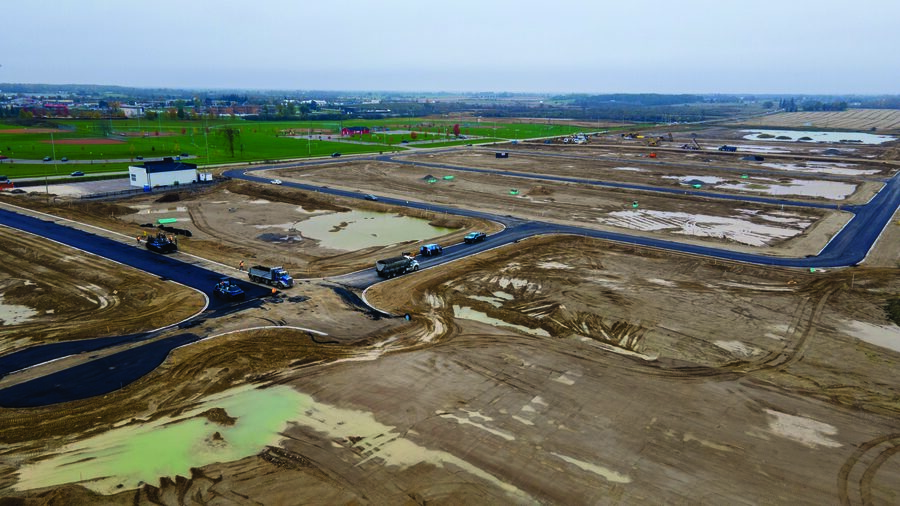
Infill can take many forms: redevelopment of underused properties, apartments above shops, additional residential units, townhouses and small multi-unit buildings.
It does not mean putting a high-rise on every corner, nor does it mean eliminating new subdivisions. Lindsay already has designated growth areas expected to accommodate substantial new housing.
The question is how much future growth can also fit within the existing built-up area, particularly where municipal services, shops, parks and community facilities already exist.
If Lindsay is going to grow, we should use some of that growth to build the housing choices residents already say they need.
Growth is a means, not the goal
A bigger Lindsay should not be an end in itself.
Population growth is useful only if it helps create a stronger local economy, supports needed services, produces a wider range of housing, strengthens the downtown and pays a reasonable share of the infrastructure it requires.
Lindsay’s growth should not require Bobcaygeon, Fenelon Falls, Coboconk or our agricultural communities to become smaller versions of Lindsay. The point should be to preserve the tranquility and village charms of rural Kawartha Lakes while allowing Lindsay to serve as the municipality’s more urban core, as the forecasts already anticipate.
The city’s own forecasts tell us substantial growth is coming. They also tell us Lindsay is expected to carry most of it.
The important question is not simply how big Lindsay becomes.
It is what kind of Lindsay we build as it grows — whether a young couple can find a first home here, whether an older couple can downsize and remain part of the community, and whether that growth strengthens the rest of Kawartha Lakes along with it.



Leave a Comment
Your email address will not be published. Comments are moderated.